
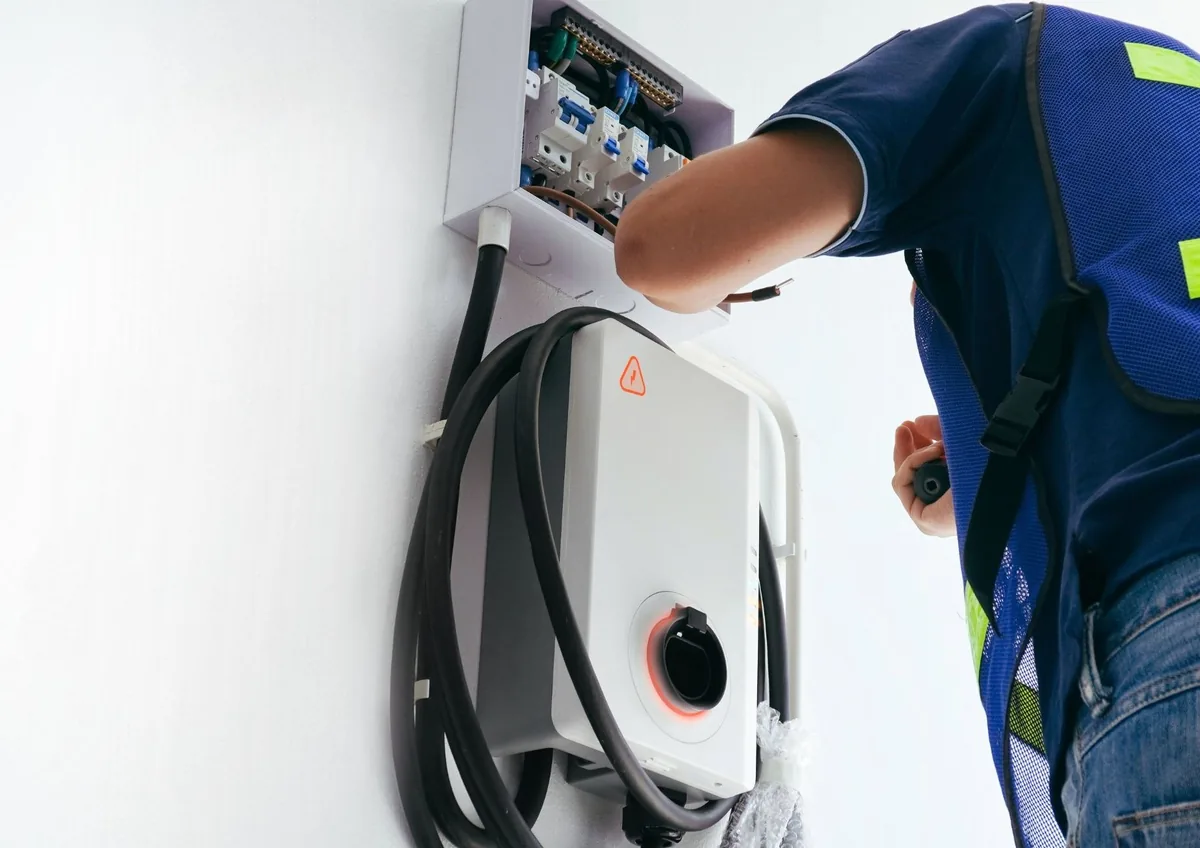
What a Mooresville EV Charger Permit Covers
A charger circuit counts as new wiring, and new wiring needs an electrical permit in Mooresville. The town reviews and inspects it under the North Carolina State Building Codes, the same codes that apply across the state. The permit covers everything between the panel and the charger:
- The new breaker in your panel, rated a quarter above the charger’s steady draw.
- The wire run from panel to parking spot, whether it goes through the attic, along the siding or under the driveway.
- The outlet or hardwired connection at the charger, a NEMA 14-50 receptacle or a direct connection for units above 40 amps.
- Any panel work done to make room, from a subpanel to a full 200-amp service upgrade.
- The final inspection, where a town inspector checks the finished circuit against the North Carolina State Building Codes.
The charger itself is a product, not wiring, so the permit is about the circuit behind it. Swapping one Wall Connector for another on an existing, correctly sized circuit is a different job from adding a new one. Your estimate states which kind of job yours is and whether a permit applies.
A 240-volt outlet for a plug-in charger is permitted the same way as a hardwired unit, because the circuit behind it is the same. Moving an existing charger to a new wall usually means new wire, so it is treated as a new circuit too. Adding a second charger for a second EV is its own circuit and its own line on the same permit application.