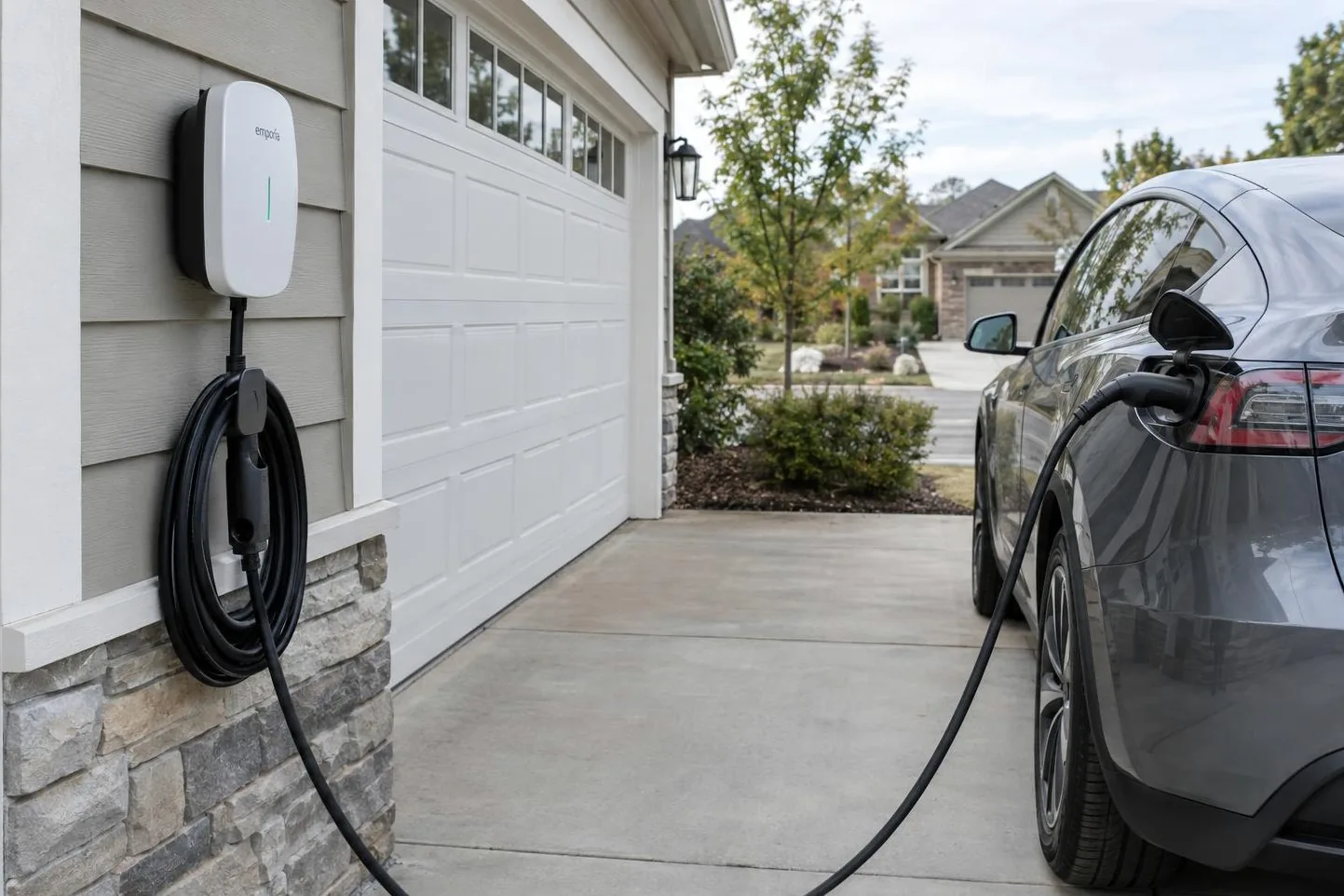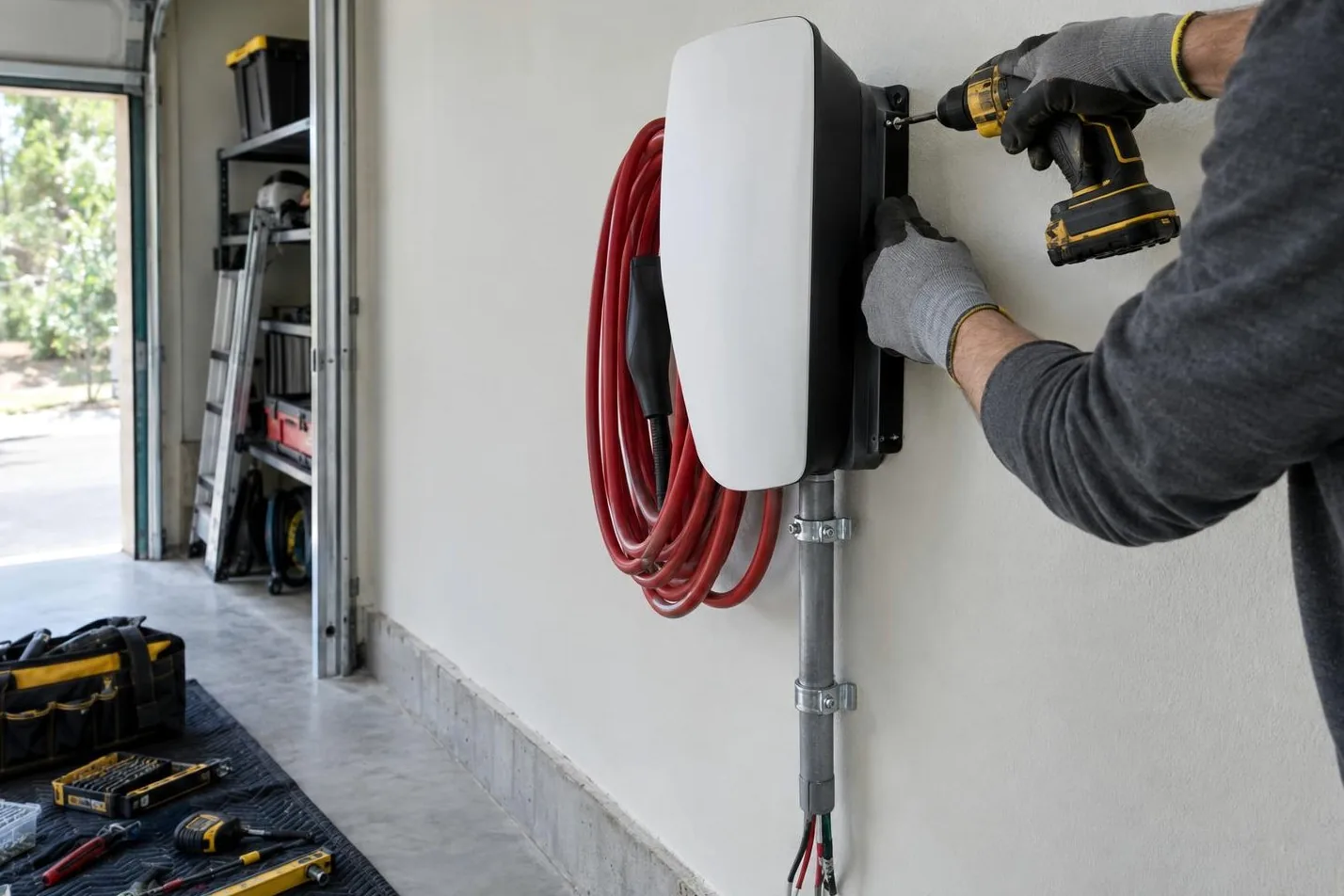
The Tesla Wall Connector draws up to 48 amps, so it gets a 60-amp breaker and a circuit of its own. We route that circuit from the panel to where the car parks and mount the unit so the cable reaches the charge port without trailing across the floor. Setup ends with Wi-Fi pairing in the Tesla app, unlocking scheduled charging, usage history and firmware updates.
A garage holding a Tesla and another brand of EV is a job for the Universal Wall Connector, which carries the Tesla plug and a J1772 adapter together. Two Teslas can also share one circuit through power sharing.
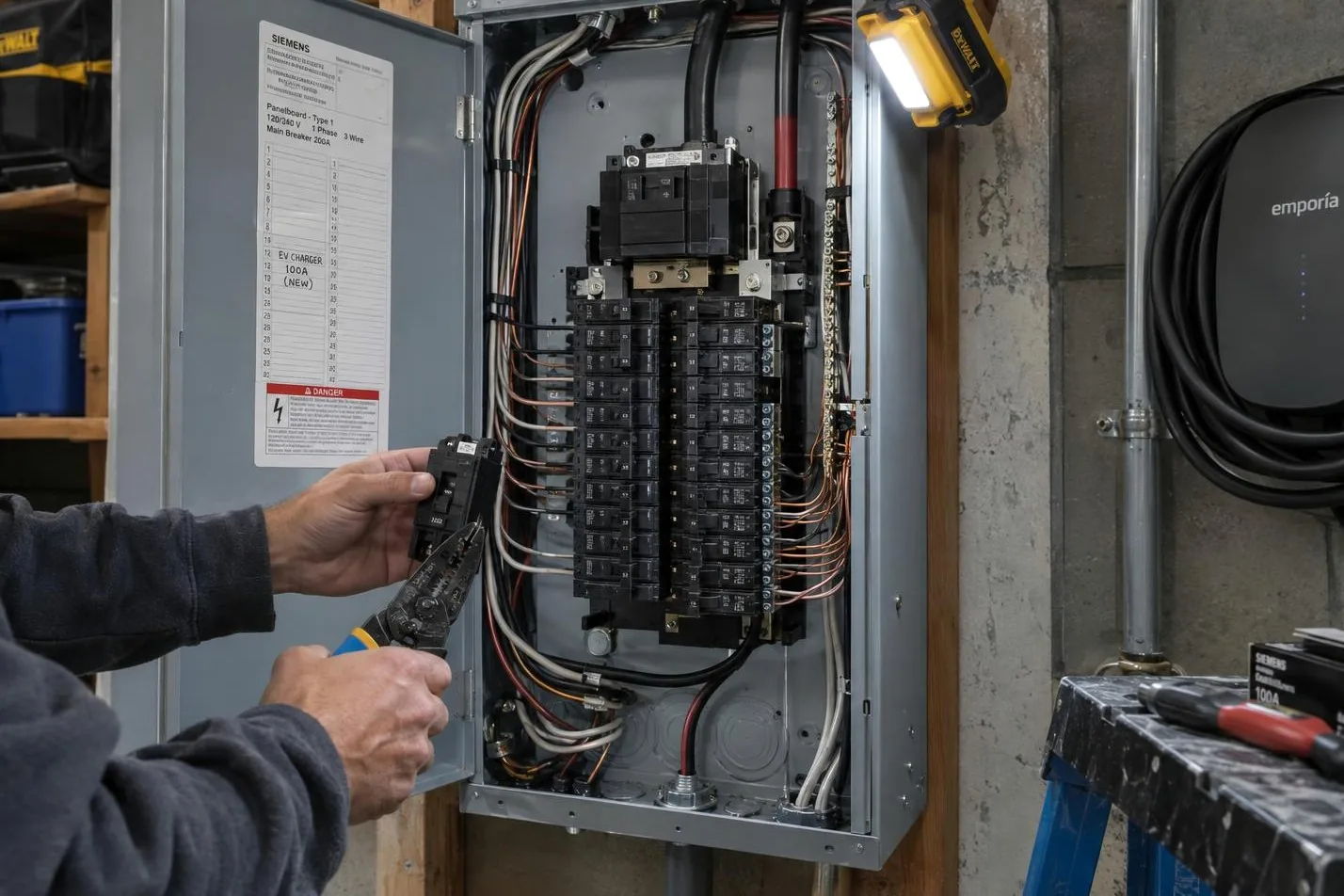
Mooresville's median home was built in 2006, and most houses from the last 20 years carry 200-amp panels with room for a charger circuit. Older homes closer to downtown are where 100-amp service still turns up. A 48-amp charger needs a 60-amp breaker, which a 100-amp panel may not be able to spare.
Every panel job starts with a load calculation. From there we pick the lightest fix that carries the charger. That might be one new breaker, load management, a subpanel by the garage or a 200-amp service upgrade. All of it happens in the same visit as the charger, unless a service change has to wait on the utility.
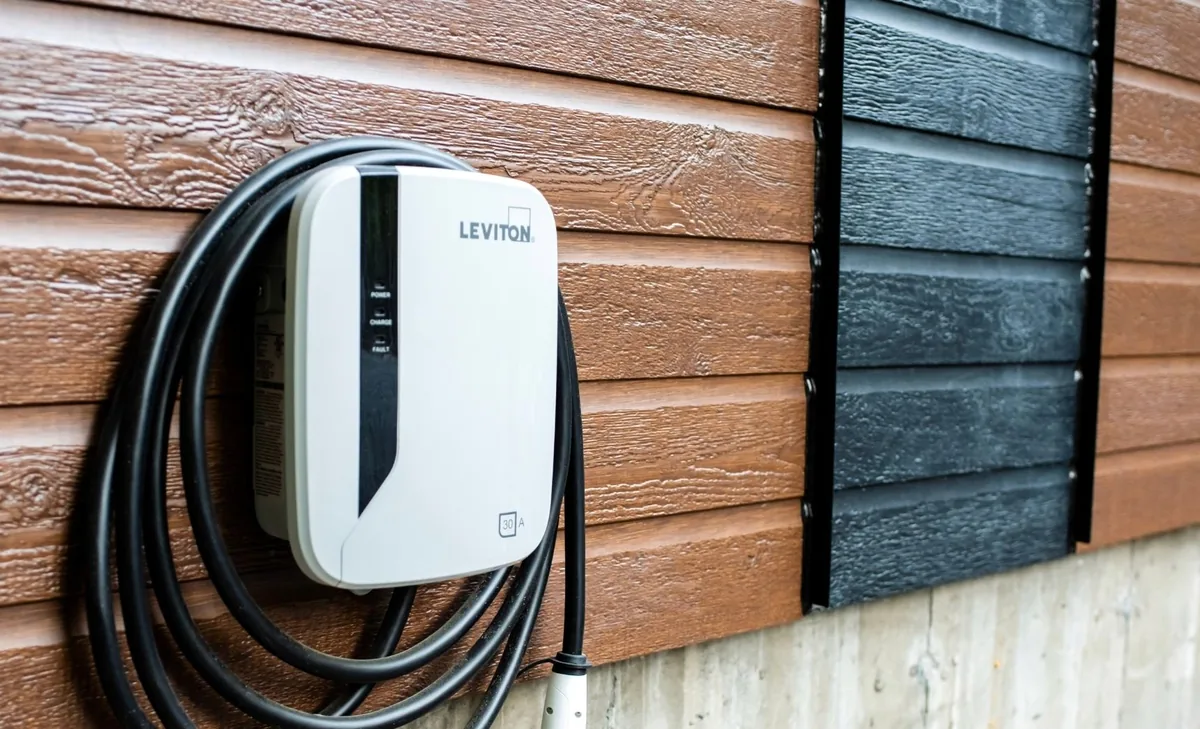
Level 2 Charger Installation for Any EV
Level 2 charging uses 240 volts and adds about 10 to 30 miles of range for each hour on the plug, against 2 to 5 miles from a household outlet. For a Mooresville commuter heading to Uptown and back, that is the gap between a refill of 11 hours or more and one that finishes in about 2 to 5.5 hours.
We install Wallbox, Emporia, ChargePoint, JuiceBox, Ford and Rivian units, hardwired or on a plug. The make in the garage might be a Chevrolet Equinox EV, a Kia EV6, a BMW i4 or a Nissan Leaf. Pick the charger after the panel check, so its amperage fits the panel and the car's onboard charger. A charger bigger than the car can use adds cost without adding speed.
NEMA 14-50 Outlet Installation
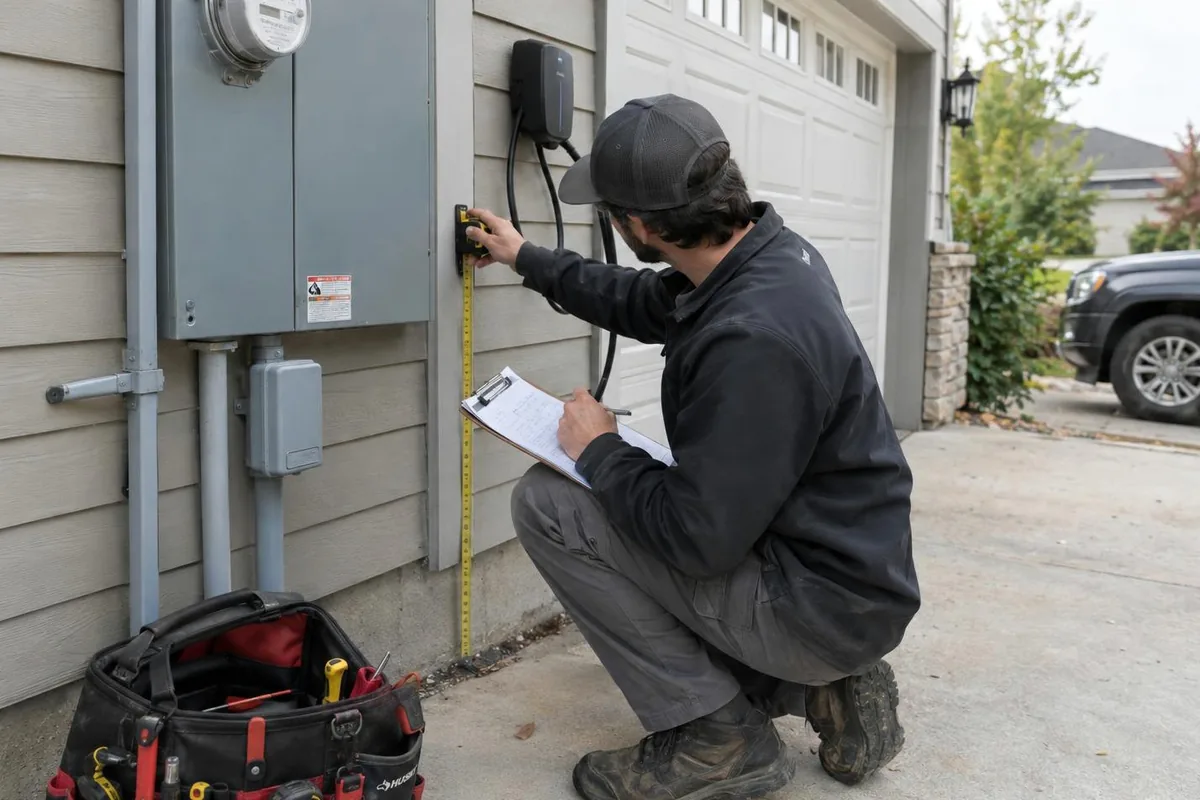
A NEMA 14-50 outlet gives a plug-in charger, or the travel cord shipped with your EV, a proper 240-volt plug in the garage. A plug-in setup is easy to change later, and you can take the charger with you if you move. It also suits a driver who has not settled on a charger brand yet.
Chargers above 40 amps cannot use a plug at all, so a 14-50 outlet pairs with lower-amperage units. Each outlet we install sits on a dedicated circuit, never shared with a dryer, and lands where the cord reaches the charge port without a stretch.
Detached Garage and Carport Chargers
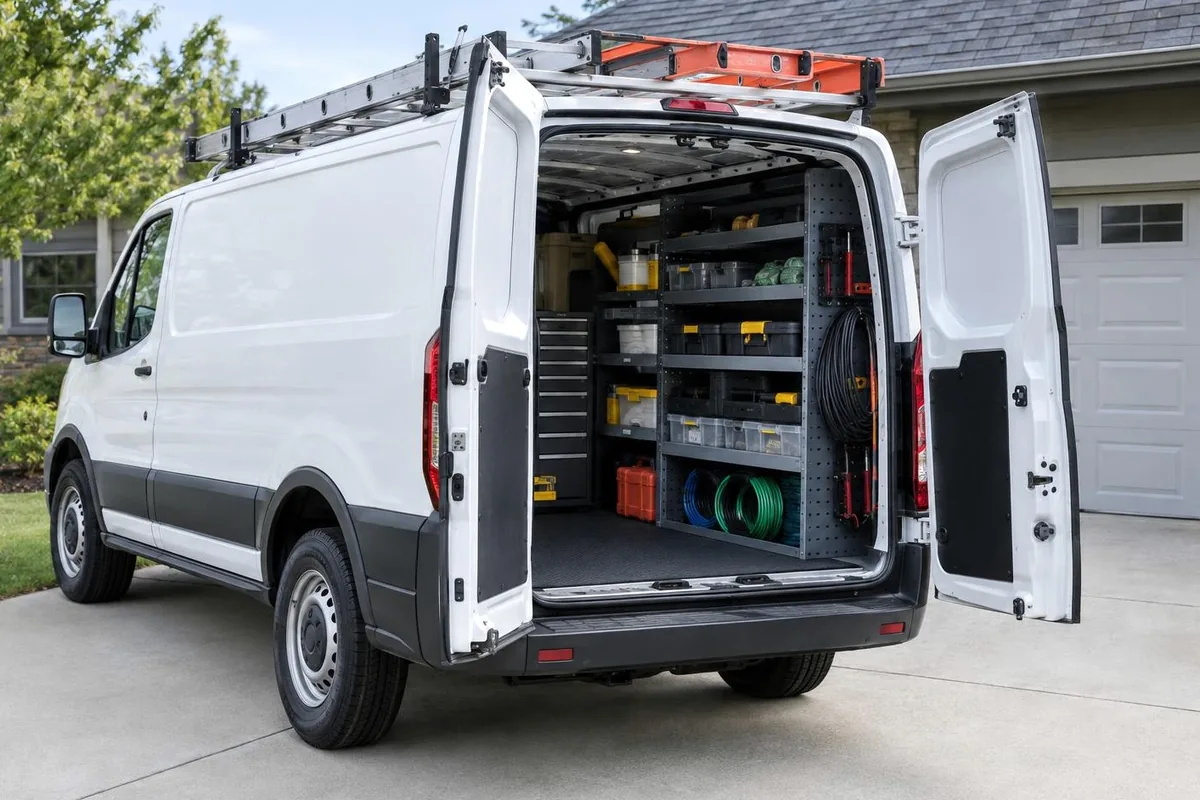
A charger in a detached garage or under a carport sits farther from the panel, so the wire run becomes the biggest part of the job. We take the shortest safe route, through an attic, along the siding in conduit or in a trench under the driveway.
Everything outside the house is rated for weather, from the conduit to the charger itself. Duke Energy's credit does not require the charger to sit in a garage, only that it connects to the home's panel. We place outdoor units so the cord never crosses a walkway.
Charging for Two-EV Households
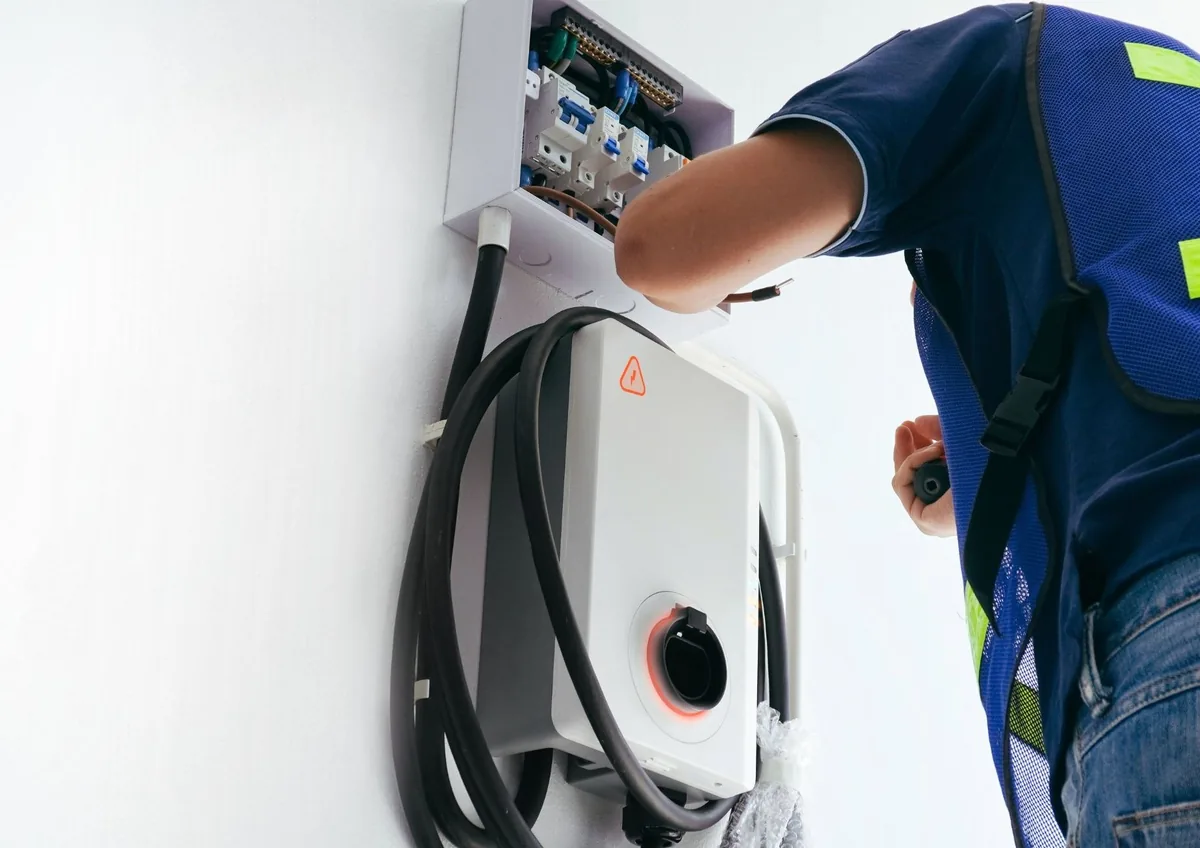
A second EV in the driveway raises the question of two circuits or one. When the panel has room, each charger gets its own breaker. When it does not, power sharing splits one circuit between the two, and both cars charge at reduced speed until one finishes.
Up to six Gen 3 Wall Connectors can share a single circuit this way. A Tesla parked beside an Ioniq 5 or Mach-E gets a Universal Wall Connector, so both cars plug into the same unit.